
Fitness Blood Test Westchester
Connect the dots between your lab results and lasting fitness success
Bloodwork That Powers Personalized Fitness Plans
At Maze Medical Fitness Testing (MMFT), we use advanced bloodwork and hormone testing to uncover the internal markers that drive your health, performance, and aging process. While fitness tests measure what your body can do, bloodwork reveals what’s happening inside — from hormones and inflammation to cholesterol, glucose, and nutrient levels. When combined with DEXA, VO₂ max, RMR, and grip strength testing, your bloodwork provides the clinical context needed for a complete, personalized health plan.
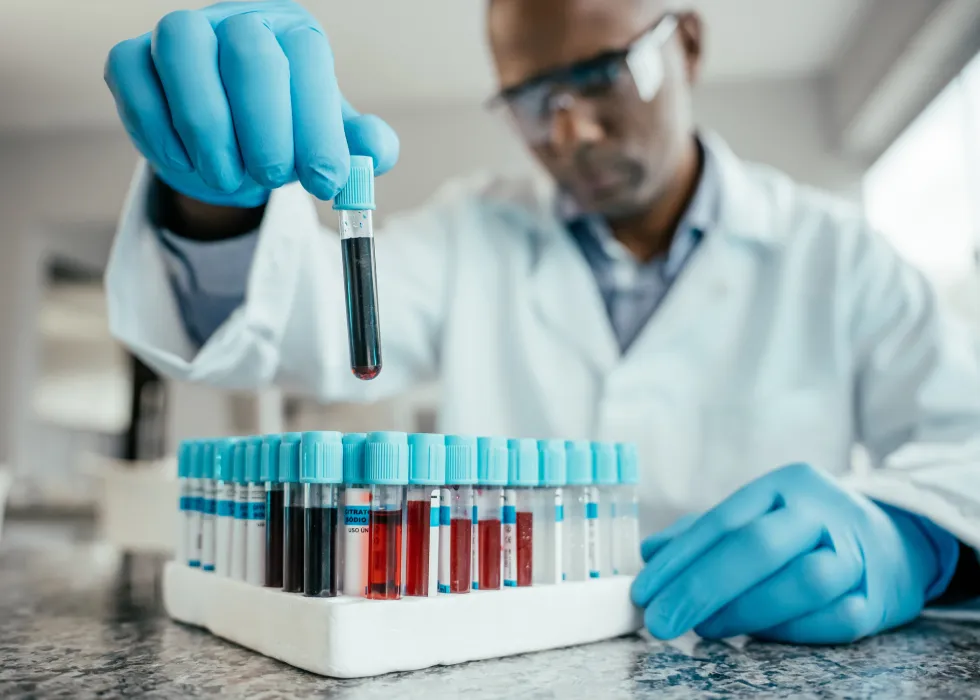
- Bloodwork is your internal dashboard, measuring hormones, cholesterol, glucose, thyroid, inflammation, and more
- Identifies hidden risks like insulin resistance, prediabetes, or low hormones before symptoms appear
- Explains why weight loss stalls, energy drops, or recovery slows
- Provides the clinical context for fitness testing results
- Interpreted by our medical team with 30+ years in preventive and hormone health
What Is Advanced Bloodwork and Hormone Testing?
Our panels go beyond standard annual labs. We measure:
- Hormones: Testosterone, estrogen, progesterone, thyroid, cortisol, insulin, growth factors
- Metabolic Markers: Fasting glucose, HbA1c, insulin sensitivity
- Cardiovascular Risk Factors: Cholesterol, triglycerides, lipoproteins, inflammation markers (CRP)
- Nutrient Status: Vitamin D, B12, iron, ferritin
- Inflammation & Aging Markers: Cytokines, oxidative stress markers (where indicated)
These insights, which can be obtained with a fitness blood test, help us explain why your fitness metrics look the way they do — and what to do about it.
Why Bloodwork and Hormone Testing Matters
- Identify Hidden Risks: Prediabetes, thyroid dysfunction, or hormonal decline often show up in bloodwork before symptoms.
- Optimize Performance: Hormones like testosterone, estrogen, and thyroid directly affect muscle mass, recovery, and metabolism.
- Support Longevity: Chronic inflammation, low vitamin D, or poor lipid profiles can accelerate aging and disease risk.
- Personalize Treatment: Results guide nutrition, exercise, supplements, or hormone optimization.

Who Should Get a Hormone and Fitness Blood Test?

- Anyone pursuing weight loss or body recomposition who wants to know why results stall
- Patients managing thyroid, insulin, or metabolic issues
- Adults over 40 monitoring hormones, inflammation, and cardiovascular risk
- Athletes optimizing fueling, recovery, and strength gains
- Individuals focused on healthy aging and longevity
What to Expect at Your Appointment
- Consultation: Review health history, symptoms, and goals
- Blood Draw: Simple, in-office blood test (fasting may be required)
- Analysis: Advanced lab testing beyond standard panels
- Report & Review (within 7–10 days): Physician-reviewed results with detailed insights into your hormone, metabolic, and cardiovascular health
- Plan: Personalized recommendations for training, nutrition, supplementation, or medical optimization

How Bloodwork Complements Other Tests
| Test | What It Tells You | What Bloodwork Adds |
|---|---|---|
| DEXA | Fat, muscle, bone distribution | Explains why composition changes (hormones, insulin, thyroid) |
| VO₂ Max | Cardiovascular efficiency | Reveals internal contributors like anemia, thyroid, cortisol |
| RMR | Calorie burn at rest | Confirms if hormones or thyroid are suppressing metabolism |
| Grip Strength | Functional muscle strength | Shows if low hormones or inflammation impact muscle quality |
We focus exclusively on testing that has been shown to matter for long-term health. Every assessment we offer is supported by research linking the data to meaningful outcomes such as disease risk, functional capacity, and health span over time. Below, we highlight the studies we believe best explain and prove why each test is important to understanding your health.
Studies
Global burden of injury due to low bone mineral density in adults aged 55 years and older, 1990 to 2021: A population-based study
From 1990 to 2021, global mortality from injuries due to low BMD increased by 8.2%, rising from 24.98 to 27.04 [...]