
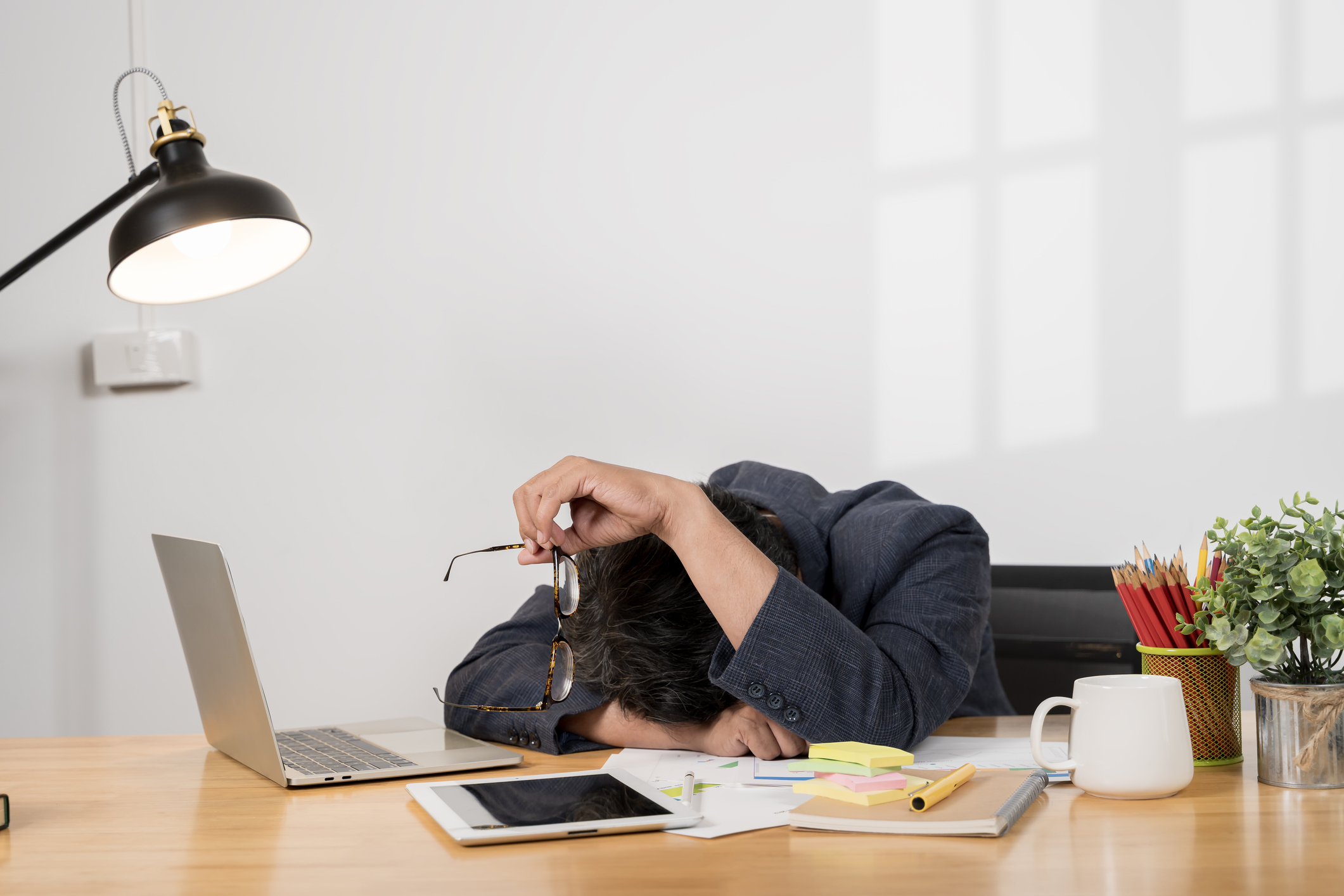
Quick answer: Your job, your sleep, and your daily habits can change your body composition, even when the number on the scale stays the same. Long hours of sitting are linked to more visceral fat, less muscle, and weaker bones. Sleeping less than about 7–8 hours is linked to more belly fat and less muscle. The best way to see what your lifestyle is actually doing to your body is to measure it, with a DEXA scan at Maze Medical Fitness Testing for body fat, visceral fat, lean mass, and bone density, and an RMR test for your real metabolism.
Your Lifestyle Is Writing Your Body Composition Story
Here’s the truth nobody puts on a motivational poster: you can eat “pretty well,” hit the gym a few times a week, and still slowly lose muscle and gain belly fat. Why? Because the other 160-ish hours of your week count too.
Your profession, your sleep, and your daily habits shape how much muscle you carry, where you store fat, how fast your metabolism runs, and how strong your bones are. Most of that happens below the surface, where a mirror can’t see it.
Let’s break it down.
How Does a Desk Job Affect Your Health?
Short answer: Sitting for long stretches every day is linked to more visceral fat, insulin resistance, muscle loss, and lower bone density, even if you work out.
A major review in Physiological Reviews found that too much sitting can lead to insulin resistance, poorer blood vessel function, lower fitness, loss of muscle mass, strength, and bone, and more total body fat and visceral fat (Pinto et al., 2023).
Your job matters here more than you’d think. A 2025 study comparing bus drivers (seated almost all shift) with sanitation workers (on their feet all day) found that the drivers had higher odds of central obesity and unhealthy blood fats (Yin et al., PLOS ONE, 2025). The researchers pointed out that sitting at work is often mandatory and long-term, which is exactly why it can hit harder than sitting on your couch.
Jobs where this shows up most:
- Office and remote workers
- Drivers, truckers, and commuters with long drives
- Healthcare, tech, finance, and call-center roles with long shifts at a screen
- Anyone who works long hours and is “too tired” to move after
The good news: Breaking up sitting time helps. Interventions that reduce or interrupt sitting have produced small but real improvements in waist size, body fat percentage, blood sugar, and blood pressure (Pinto et al., 2023).
Can Poor Sleep Cause Belly Fat?
Short answer: Yes. Short sleep is linked to more visceral fat, and in a controlled study, cutting sleep increased belly fat specifically.
This is one of the most underrated parts of health and wellness. In a Mayo Clinic study published in the Journal of the American College of Cardiology, adults whose sleep was restricted for two weeks ate about 300 extra calories a day, gained weight, and stored that fat mostly in the abdomen, especially as visceral fat (Covassin et al., 2022). Visceral fat is the deep fat around your organs that’s tied to heart disease and diabetes.
Big population data agree. In more than 5,000 U.S. adults who had DEXA scans, less sleep was linked to more visceral fat, with the benefit leveling off around 8 hours a night (Giannos et al., Sleep Medicine, 2023).
Why sleep changes your body:
- Hunger hormones get scrambled. Less sleep pushes up appetite and cravings for high-calorie foods.
- Cortisol rises. Higher stress hormones encourage fat storage around your middle.
- Muscle takes a hit. In a study of nearly 20,000 adults, shorter and poorer sleep was linked to less muscle and more fat over time (Song et al., BMC Public Health, 2023).
Does Shift Work Affect Weight and Metabolism
Short answer: It can. Working nights or rotating shifts throws off your body clock, which raises metabolic and inflammatory risk.
Nurses, first responders, factory workers, pilots, and anyone with an unpredictable schedule face a double hit: less sleep and sleep at the “wrong” time. Research links this kind of circadian disruption to higher risk of obesity, visceral fat, insulin resistance, type 2 diabetes, and high blood pressure (Ghanem et al., Journal of Clinical Sleep Medicine, 2026).
How Do Lifestyle Habits Affect Bone Density?
Short answer: Sitting a lot and sleeping too little or too much are linked to lower bone density. Physical activity helps protect against both.
Bone health isn’t just a “later in life” problem. In a study of over 10,000 U.S. adults, long daily sitting raised the odds of low bone density by 58%, short sleep by 41%, and long sleep by 36%. Physical activity was protective and helped offset the risks from sitting and irregular sleep (Yang et al., Bone, 2024).
Other habits that matter for your bones include smoking, alcohol, diet quality (calcium, vitamin D, and protein), and resistance training. A DEXA bone density scan shows you where you actually stand.
Do Your Habits Change Your Metabolism?
Short answer: Yes. Your resting metabolic rate (RMR) depends mostly on how much muscle you carry, so habits that build or lose muscle move your metabolism with them.
Your RMR is the number of calories you burn at rest, and it’s the biggest piece of your daily calorie burn. Long-term training can raise RMR, mostly by building lean muscle (Speakman & Selman, 2003). The flip side: very low-calorie dieting can lower your metabolism, which makes weight loss harder to keep off.
That’s why guessing is risky. Online calculators estimate your metabolism from age, height, and weight. An RMR test at Maze measures it, so your nutrition plan is built on your real numbers instead of a formula.
Why Measure Body Composition Instead of Guessing?
Short answer: Two people with the same weight can have completely different health risks. Measuring body composition shows what’s really changing.
Your lifestyle can quietly swap muscle for fat without your weight moving at all. That’s why Maze focuses on body composition, not just weight.
What a DEXA scan shows you:
- Body fat percentage and where it’s stored
- Visceral fat, the risky fat around your organs
- Lean muscle mass, arm by arm and leg by leg
- Bone mineral density
What an RMR test shows you:
- How many calories your body actually burns at rest
- Whether your metabolism is lower or higher than predicted
- A starting point for a personalized nutrition plan
Together, these tests give you and your healthcare provider a clear picture of your health, longevity, and where your habits are taking you. Learn more about Maze testing options
5 Habits That Protect Your Body Composition
- Break up sitting every 30–60 minutes. Stand, walk, take calls on your feet.
- Aim for 7–8 hours of sleep. Treat it like a workout you can’t skip.
- Lift something heavy 2–3 times a week. Strength training protects muscle, metabolism, and bone.
- Get daily movement outside the gym. Walks, stairs, and chores count.
- Measure, don’t guess. Retest with DEXA and RMR to see if your changes are working.
If you snore loudly, wake up gasping, or are exhausted no matter how long you sleep, talk to your healthcare provider. Sleep apnea and other sleep disorders are common and treatable.
Frequently Asked Questions
How does sitting all day affect my body? Long periods of sitting are linked to more visceral fat, insulin resistance, muscle loss, and lower bone density, even in people who exercise.
How much sleep do I need to avoid belly fat? Research links shorter sleep to more visceral fat, with benefits leveling off around 8 hours. Most adults should aim for 7–8 hours.
Can I see my visceral fat? Not in the mirror. A DEXA scan measures visceral fat directly. Book a DEXA scan at Maze .
What’s the difference between RMR and BMR? Both describe calories burned at rest. RMR is measured under slightly less strict conditions and is what most clinics, including Maze, test.
How often should I get a DEXA scan? Many people retest every 3–6 months when they’re actively changing their training, nutrition, or sleep, so they can see whether the changes are working. Your provider can help you decide what’s right for you.
Does a desk job slow my metabolism? Indirectly, yes. Less movement over time can mean less muscle, and less muscle means a lower resting metabolic rate.
Ready to See What Your Lifestyle Is Really Doing to Your Body?
Your job, your sleep, and your habits are shaping your body every day. Stop guessing. Get the real numbers.
Book your DEXA scan and RMR test at Maze Medical Fitness Testing today and walk away with a clear picture of your body fat, visceral fat, muscle, bone density, and metabolism, plus a plan to keep your body on a healthy, strong track.
Sources
- Pinto AJ, et al. Physiology of Sedentary Behavior. Physiological Reviews. 2023.
- Covassin N, et al. Effects of Experimental Sleep Restriction on Energy Intake, Energy Expenditure, and Visceral Obesity. Journal of the American College of Cardiology. 2022.
- Giannos P, et al. Shorter Sleep Duration Is Associated With Greater Visceral Fat Mass in US Adults: Findings From NHANES, 2011–2014. Sleep Medicine. 2023.
- Yang H, et al. The Independent and Joint Association Between Physical Activity, Sleep Duration and Daily Sitting Time With Bone Mineral Density. Bone. 2024.
- Yin Z, et al. Association Between Occupational Sedentary Behavior and Metabolic Syndrome and Related Diseases in Males. PLOS ONE. 2025.