
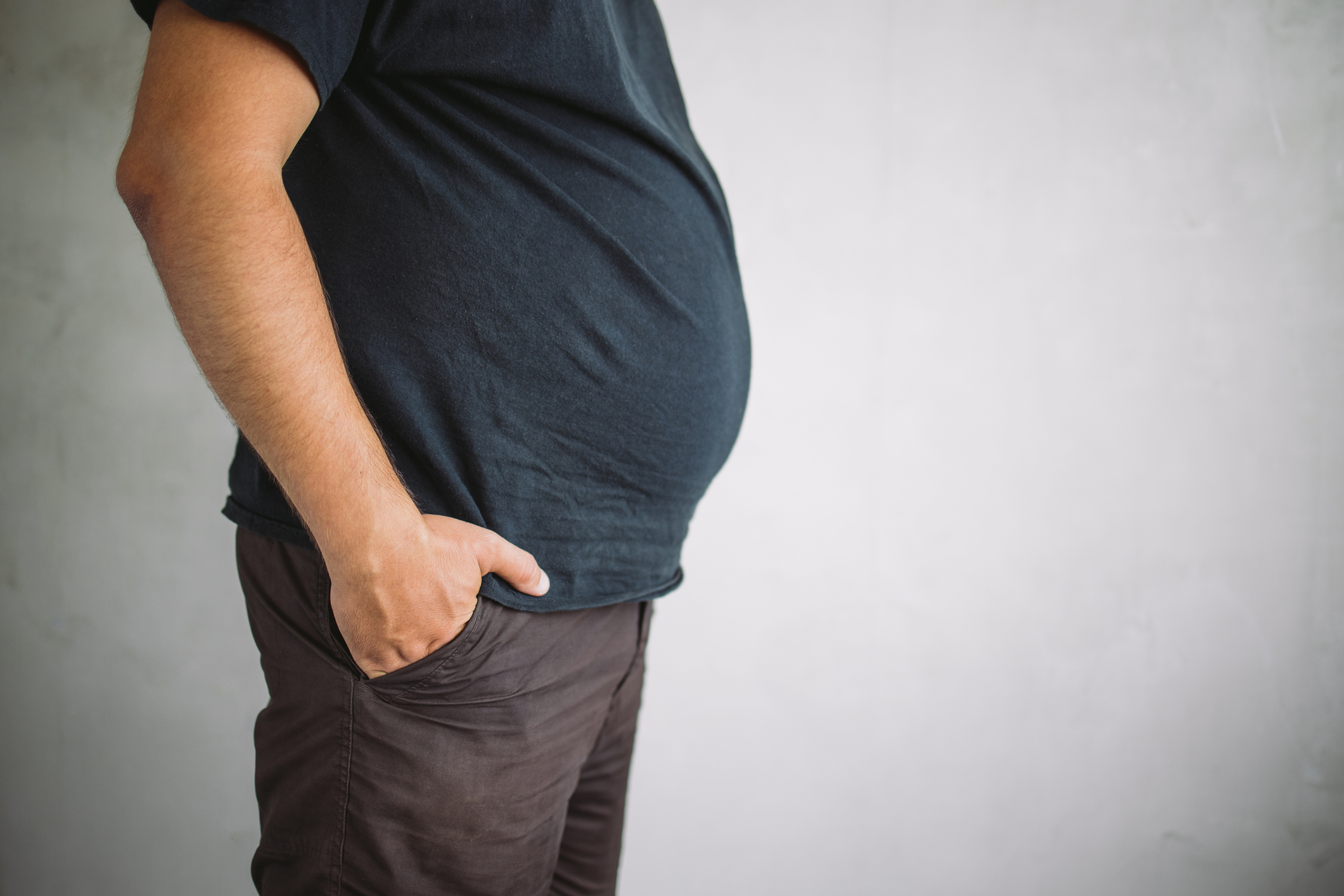
You’re eating fine. You’re working out (mostly). But your waistband is getting tighter, your energy is in the basement, and your inbox seems to be in charge of your life.
Welcome to “stress belly”
It’s not just a TikTok buzzword. Research does link long-term stress to more fat around the middle, and to changes in muscle and bone too. The catch: you can’t see most of it in a mirror or on a bathroom scale. That’s where a DEXA scan at Maze Medical Fitness Testing comes in, at our locations in Harrison, NY (Westchester County) and Midtown Manhattan.
What is “Stress Belly”?
Quick answer: “Stress belly” is the informal name for extra fat around the abdomen that’s linked to long-term (chronic) stress. Much of it can be visceral fat, the deep fat that wraps around your organs and is tied to higher risk of type 2 diabetes and heart disease.
It’s not a medical diagnosis. But the pattern is real. In the PURE study of about 120,000 people, those with higher life stress (from work, home, money, or big life events) were more likely to have abdominal obesity than people with low stress (Kivimäki et al., Nature Reviews Endocrinology, 2023). Another analysis found that people with three or more ongoing stressors had 50% higher odds of obesity and were more likely to have a larger waist and higher body fat percentage (Kris-Etherton et al., Current Atherosclerosis Reports, 2022).
How Does Cortisol Cause Belly Fat?
Cortisol is your main stress hormone. Short bursts are normal and helpful. When stress drags on for weeks or months, the stress system stays switched on, which can push fat storage toward the belly, drive cravings, and make your body less responsive to insulin.
Here’s what happens under the hood:
- Your visceral fat is extra sensitive to cortisol. Fat cells deep in the belly have more cortisol receptors than fat elsewhere, so they respond more strongly when cortisol stays high (Siddiqui et al., International Journal of Obesity, 2022).
- Cortisol messes with hunger signals. High cortisol can interfere with leptin and insulin, making you feel less full and making comfort food feel more rewarding (Siddiqui et al., 2022).
- Short-term stress vs. long-term stress are different. A quick stressor can actually blunt appetite. Chronic stress is what disrupts energy balance and drives visceral fat buildup (Jahanbani et al., International Journal of Obesity, 2025).
- Long-term cortisol matters more than a single snapshot. A meta-analysis found that hair cortisol, which reflects months of exposure, was linked to higher BMI and waist size, while a one-time morning reading was not (Ostinelli et al., Obesity, 2021).
Real talk: Not everyone gains weight under stress. Some people eat more, some eat less, and some don’t change at all (Kivimäki et al., 2023). That’s exactly why measuring beats guessing.
Does Stress Make You Lose Muscle?
It can. Cortisol is a “breakdown” hormone. Over time, high levels can speed up muscle protein breakdown and slow down muscle building.
Researchers describe chronic stress and high cortisol as a risk factor for sarcopenia (age-related muscle loss), partly because cortisol blocks muscle-building signals and blunts the effects of testosterone and IGF-1 (Prado et al., Nature Reviews Endocrinology, 2024). A large genetic study found that people genetically prone to higher cortisol had slightly lower grip strength and lean mass, with the effect seen mainly in women (Katsuhara et al., Journal of Clinical Endocrinology & Metabolism, 2022).
Why it matters: losing muscle while gaining belly fat can leave your weight unchanged. The scale says “all good.” Your body composition says otherwise.
Can Stress Affect Your Bones?
Very high cortisol is clearly bad for bone. The clearest evidence comes from steroid medications (like prednisone) and medical conditions with cortisol excess, which reduce bone formation and raise fracture risk (Paccou et al., Nature Reviews Endocrinology, 2026).
For everyday stress, the link is less direct. Researchers believe cortisol can add to age-related bone loss, especially alongside muscle loss and fat gain (Prado et al., 2024). If you’ve taken steroid medications for 3 months or longer, ask your clinician about a bone density check.
The Maze advantage: One DEXA scan measures visceral fat, lean muscle, and bone density in a single session.
Can you See Stress Belly On a Scale?
No. A scale gives you one number. It can’t tell visceral fat from muscle, and it can’t show bone.
| What you want to know | Bathroom scale | DEXA scan at Maze | RMR test at Maze |
|---|---|---|---|
| Total weight | ✅ | ✅ | — |
| Visceral (belly) fat | ❌ | ✅ | — |
| Lean muscle by region | ❌ | ✅ | — |
| Bone density | ❌ | ✅ | — |
| Calories you burn at rest | ❌ | — | ✅ |
How Can a DEXA Scan and RMR Test Help With Stress Belly?
DEXA shows where your fat sits and whether you’re losing muscle or bone. RMR testing shows how many calories your body actually burns at rest, so your nutrition plan isn’t based on a generic formula.
- DEXA body composition scan: visceral fat, fat-to-lean ratio, regional muscle, and bone density. A great baseline before a stressful season (new job, new baby, caregiving) and a way to track change after.
- RMR (resting metabolic rate) test: measures your real resting calorie burn. Under stress, people often under-eat all day and overeat at night, or cut calories too hard. Knowing your actual number helps you fuel smart and protect muscle.
Bring your results to your doctor, dietitian, or trainer to build a plan that fits your body.
How Do You Get Rid of Stress Belly?
There’s no magic cortisol supplement. Focus on habits that lower stress and protect muscle, then re-measure.
- Lift weights 2–3 times a week. Strength training protects muscle and bone and helps with stress (An et al., PLOS ONE, 2024).
- Move daily. Regular exercise lowers perceived stress and improves how your body reacts to it (Kris-Etherton et al., 2022).
- Prioritize sleep. Better sleep lowers stress, and lower stress improves sleep. It goes both ways (Kris-Etherton et al., 2022).
- Try mindfulness, with realistic expectations. In an 8-week trial, a digital meditation program reduced stress and abdominal girth, but not BMI (Radin et al., PLOS ONE, 2022). A meta-analysis found mindfulness reduced stress short term but did not reliably reduce weight (Sosa-Cordobés et al., International Journal of Environmental Research and Public Health, 2022).
- Eat enough protein and don’t crash diet. Your RMR test [LINK: confirm] shows what “enough” means for you.
- Watch the coping habits. Stress-eating, extra drinks, and smoking add up. In one long-term study, smoking explained part of the link between stress and visceral fat (Siddiqui et al., 2022).
When to see a doctor: Rapid belly weight gain with purple stretch marks, a rounded face, easy bruising, muscle weakness, or new high blood pressure or blood sugar can signal a medical cortisol problem (like Cushing’s syndrome). That needs a medical evaluation, not just a lifestyle reset.
FAQ: Stress Belly and Cortisol
Is stress belly real? Yes, in the sense that chronic stress is linked to more abdominal fat in large studies. It’s not a formal diagnosis, and not everyone responds the same way.
Can cortisol cause belly fat even if I’m not overweight? Possibly. Visceral fat can build up even at a normal weight. A DEXA scan is one of the best ways to see it.
Should I get my cortisol tested? A single cortisol test doesn’t measure everyday stress well. Testing is mostly used when a doctor suspects a hormone disorder. Talk to your clinician.
Do cortisol-lowering supplements work for belly fat? There’s no strong evidence that supplements marketed as “cortisol blockers” reduce belly fat. Focus on strength training, sleep, nutrition, and stress management.
How often should I re-check my body composition? Many people re-scan every few months to track progress. Ask your clinician or the Maze team what timing makes sense for your goals.
Stop Guessing. Start Measuring
Stress isn’t going anywhere, but you can know exactly what it’s doing to your body. Get a clear look at your visceral fat, muscle, bone, and metabolism with a DEXA scan and RMR test at Maze Medical Fitness Testing.
Sources
- Kivimäki M, Bartolomucci A, Kawachi I. The multiple roles of life stress in metabolic disorders. Nature Reviews Endocrinology, 2023.
- Siddiqui NZ, et al. The longitudinal association between chronic stress and (visceral) obesity over seven years in the general population: The Hoorn Studies. International Journal of Obesity, 2022.
- Prado CM, et al. Sarcopenic obesity in older adults: a clinical overview. Nature Reviews Endocrinology, 2024.
- Kris-Etherton PM, et al. The Dynamic Interplay of Healthy Lifestyle Behaviors for Cardiovascular Health. Current Atherosclerosis Reports, 2022.
- Radin RM, et al. Impact of digital meditation on work stress and health outcomes among adults with overweight: A randomized controlled trial. PLOS ONE, 2022.