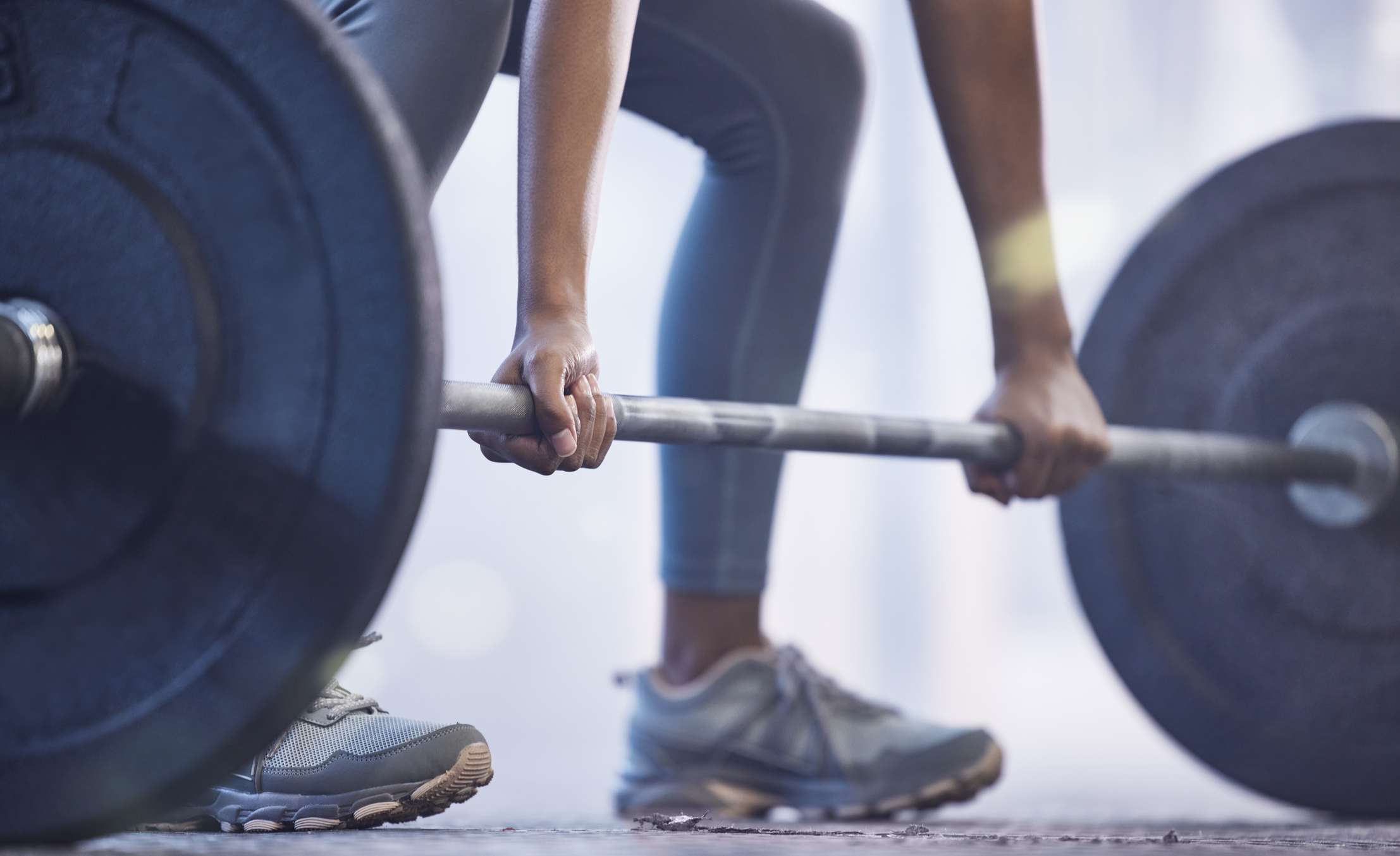
Let’s talk about the number almost nobody brags about at the gym: your bone mineral density, or BMD. Everyone obsesses over their deadlift PR, their mile time, their resting heart rate. But your BMD? That quiet little number might be the most important fitness metric you’ve never checked. And here’s the plot twist most people miss: the barbell that builds your muscles is also one of the best tools on the planet for building your bones.
So grab your pre-workout and settle in. Here’s why your bones are secretly begging you to pick up something heavy.
First, What Even Is Bone Density?
Think of your skeleton as living, breathing scaffolding. It is constantly remodeling itself, breaking down old bone and laying down new bone. Bone mineral density measures how much mineral is packed into that scaffolding, and it is the gold standard for figuring out your fracture risk. It is measured with a quick, painless scan called a DEXA (dual-energy x-ray absorptiometry), which spits out a “T-score” comparing your bones to peak young-adult bone mass (Walker and Shane, New England Journal of Medicine, 2023).
Here is the sobering part: every one standard deviation your BMD drops below normal roughly doubles or triples your fracture risk (Walker and Shane, New England Journal of Medicine, 2023). Bone loss is also sneaky. Osteoporosis is completely silent until the moment something snaps. In the first few years after menopause, women can lose up to 5% of bone mass per year (Maestroni et al., Sports Medicine, 2020). Translation: you want to know your number before it becomes a problem, not after.
Reason #1: Bones Respond to Load Like Muscles Respond to Reps
Your bones are not passive. They adapt to stress exactly like muscle does. When you load them hard enough, muscles yank on bone, gravity pushes down through the skeleton, and that mechanical tension signals your body to build denser, stronger bone through a process called mechanotransduction (Zou and Liu, Endocrine, 2026).
The catch? The load has to be meaningful. Gentle, repetitive, low-magnitude movement barely moves the needle. Walking, cycling, and swimming are fantastic for your heart but largely insufficient to actually improve BMD (Stokes et al., Clinical Endocrinology, 2025). Your bones need a reason to grow, and “I strolled on the treadmill” is not a compelling argument to your skeleton.
Reason #2: Heavy Really Is Better
This is where lifting heavy earns its spot. The biggest skeletal gains come from progressive resistance training done at high loads, around 80 to 85% of your one-rep max, at least twice a week, using big multi-joint movements like squats and deadlifts that load the hip and spine (Maestroni et al., Sports Medicine, 2020). In studies of women with estrogen deficiency, higher-intensity lifting produced greater hip BMD gains than moderate-intensity training, and researchers even found a linear relationship between the amount of weight lifted and the increase in bone density (Ciolac and Rodrigues-da-Silva, Sports Medicine, 2016).
The famous LIFTMOR trial put postmenopausal women with low bone density through high-intensity resistance and impact training and saw improvements in both lumbar spine and femoral neck BMD, without the fractures everyone worried about (American College of Obstetricians and Gynecologists, 2021). Heavy lifting, done with good coaching, is not the risk. Fragile, untrained bone is the risk.
Reason #3: The Best Results Come From a Combo
If you want to be strategic, do not lift to the exclusion of impact work. The strongest evidence points to combined programs, progressive resistance training plus weight-bearing impact exercises like jumping, hopping, and skipping, as the winning formula for spine and hip bone density (Maestroni et al., Sports Medicine, 2020). A network meta-analysis of postmenopausal women found that combined aerobic-plus-resistance exercise ranked highest for improving BMD at both the femoral neck and lumbar spine (Xiaoya et al., Scientific Reports, 2025).
So the ideal week looks less like “cardio only” and more like: lift heavy a couple of days, add some jumps and impact most days, and keep your aerobic work in the mix for your heart. Your skeleton loves variety and novelty almost as much as it loves heavy load.
Reason #4: It Is Never Too Late (or Too Early) to Start
Here is the good news for everyone who thinks this ship has sailed. While you build most of your peak bone mass in your youth, middle-aged and older adults absolutely still improve BMD with resistance training (Ciolac and Rodrigues-da-Silva, Sports Medicine, 2016). Programs tend to show measurable gains after 4 to 6 months, with bigger payoffs when you stick with it for a year or more (Ciolac and Rodrigues-da-Silva, Sports Medicine, 2016).
Bonus: strength and balance training also slashes fall risk, and since roughly 95% of hip fractures come from a fall, that protection may matter even more than the BMD bump itself (American Association of Clinical Endocrinology, 2020). Lifting does not just make your bones denser. It keeps you on your feet in the first place.
One honest caveat: if you already have severe osteoporosis, certain loaded spinal movements (heavy forward bending, twisting under load) can be risky, so you want expert guidance before you go max-effort (American Association of Clinical Endocrinology, 2020). That is exactly why knowing your number first is so powerful.
Reason #5: You Can’t Improve What You Don’t Measure
You would not try to cut your 5K time without a stopwatch. So why guess about your bones? A DEXA scan gives you a baseline BMD, tells you whether you are in healthy, osteopenic, or osteoporotic territory, and lets you track whether your training is actually working. National guidelines recommend bone density screening for all women 65 and older, and earlier for postmenopausal women with risk factors like low body weight, smoking, or a family history of fracture (US Preventive Services Task Force, JAMA, 2025).
But you do not have to wait until a milestone birthday to get curious about your skeleton. Whether you are a lifter who wants data, an athlete optimizing performance, or someone with a family history that keeps you up at night, a baseline number is pure power.
The Bottom Line
Your bones are not fragile china to be protected by sitting still. They are adaptive, living tissue that gets stronger when you challenge them. Lift heavy. Add some impact. Stay consistent. And measure your progress so you actually know it is working.
Ready to meet your number? At Maze Medical Fitness Testing, we help you get a clear, data-driven picture of your bone health so you can train smarter and build a skeleton that keeps up with your ambitions. Book your bone density assessment and let’s turn that quiet little number into something worth bragging about.
Sources
- Walker MD, Shane E. Postmenopausal Osteoporosis. New England Journal of Medicine. 2023.
- Maestroni L, Read P, Bishop C, et al. The Benefits of Strength Training on Musculoskeletal System Health: Practical Applications for Interdisciplinary Care. Sports Medicine. 2020.
- Ciolac EG, Rodrigues-da-Silva JM. Resistance Training as a Tool for Preventing and Treating Musculoskeletal Disorders. Sports Medicine. 2016.
- Committee on Clinical Practice Guidelines–Gynecology. Osteoporosis Prevention, Screening, and Diagnosis. American College of Obstetricians and Gynecologists. 2021.
- US Preventive Services Task Force. Screening for Osteoporosis to Prevent Fractures: Recommendation Statement. JAMA. 2025.