
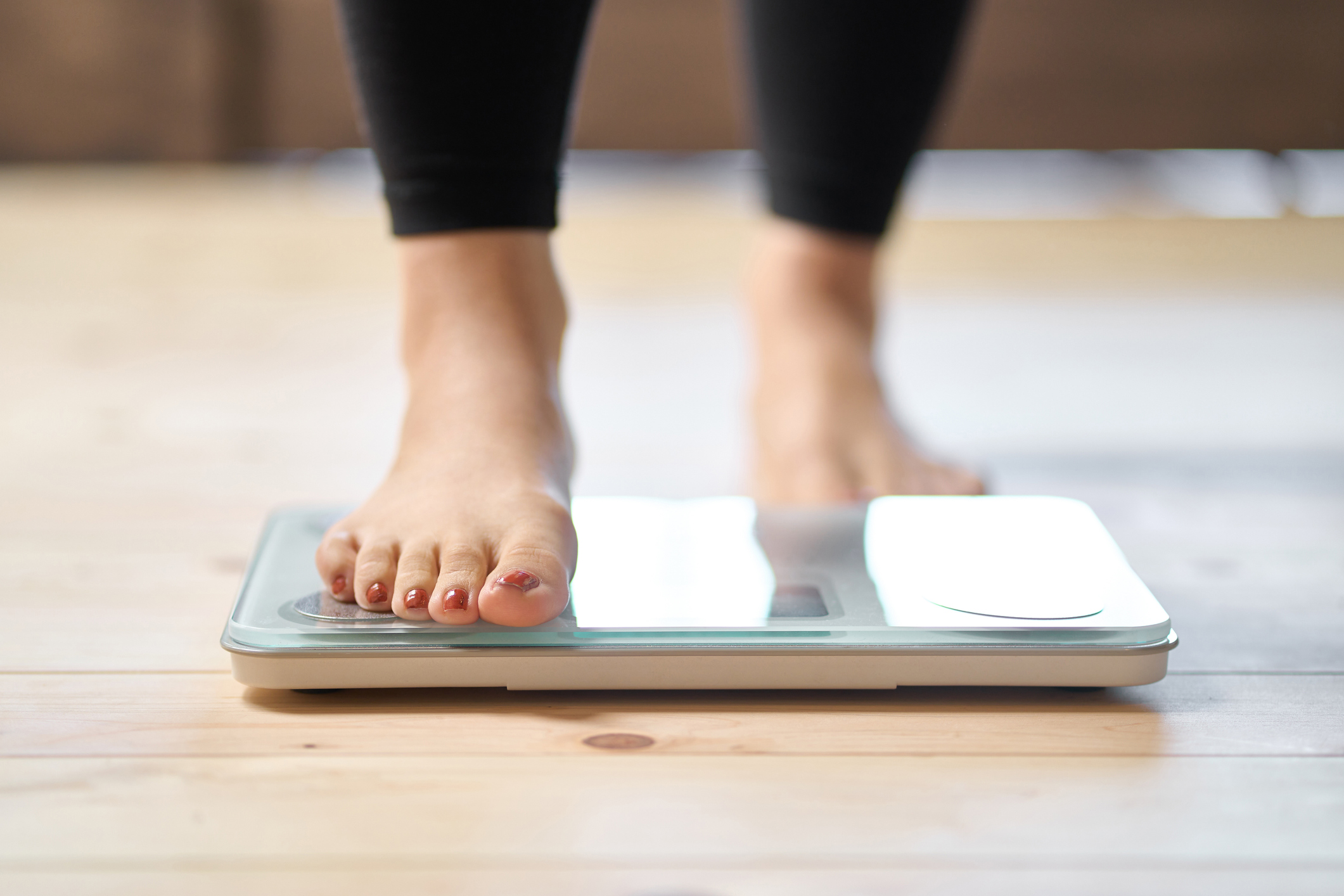
“My Scale Said Something Totally Different”
We hear this at Maze Medical Fitness Testing all the time. A client comes in, tells us they’ve been tracking their body fat on a smart scale at home, and mentions that the numbers jump around from day to day. Then they step off our DEXA machine and their results look very different from what their scale has been telling them. Sometimes their body fat is higher than they thought. Sometimes their muscle mass is lower. Almost always, they’re surprised.
If that sounds familiar, you’re not doing anything wrong. The problem is the technology. Here’s why.
How a Smart Scale “Measures” Body Fat
Most smart scales use a method called bioelectrical impedance analysis (BIA). When you step on the metal pads, the scale sends a tiny, painless electrical current through your body. Water and muscle conduct electricity well, and fat doesn’t. The scale measures how much resistance the current meets, then plugs that number, along with your weight, height, age, and sex, into a formula to estimate your body fat and muscle.
That last word matters. A smart scale doesn’t actually see your fat or muscle. It makes an educated guess, and that guess depends on things like:
- How hydrated you are. BIA readings track closely with your body water, so drinking a lot of water, sweating through a workout, or eating a salty dinner can change your reading.
- Which formula the scale uses. Research shows these formulas tend to be specific to certain populations and devices, which means they may not fit you (Lahav et al., European Journal of Clinical Nutrition, 2021).
- Your body size and shape. Errors often get bigger in people who are very lean, carry more weight, or have more muscle.
What the Research Shows
Smart scales are actually quite good at one thing: your weight. In a hospital study that tested three popular smart scales right after patients had a DEXA scan, body weight readings were typically within about half a kilogram (Frija-Masson et al., JMIR mHealth and uHealth, 2021).
Body composition was a different story. The same scales underestimated fat mass by a typical 2.2 to 4.4 kg (about 5 to 10 pounds), with some people off by much more. The researchers concluded plainly that smart scales are not accurate for body composition and should not replace DEXA (Frija-Masson et al., 2021).
Other studies have found the same pattern. One study of healthy adults found that bioimpedance underestimated body fat percentage by about 5.6 percentage points and overestimated fat-free mass by nearly 3 kg compared with DEXA. Even though the two methods moved in the same general direction, the authors stressed that they are “not equivalent technologies” (Lopes et al., International Journal of Environmental Research and Public Health, 2022).
So if your smart scale says 22% body fat and your DEXA says 27%, that gap is exactly what the research predicts.
How a DEXA Scan Is Different
DEXA (dual-energy X-ray absorptiometry) uses two very low-energy X-ray beams. Bone, fat, and lean tissue each absorb those beams differently, so the scanner can directly separate your body into three parts: fat, lean mass (muscle and organs), and bone (Carter et al., American Society for Metabolic and Bariatric Surgery, 2025).
That’s why DEXA is widely considered the reference standard for body composition in clinics and research (Soh et al., PLoS One, 2022). Here’s what that means for you:
- High precision. Repeat DEXA scans typically vary by only about 1% to 3% for body fat measurements, so real changes stand out from noise (Prado et al., American Journal of Clinical Nutrition, 2026).
- Less affected by hydration. Changes in body fluid have only a minimal effect on DEXA’s fat and bone measurements (Prado et al., 2026).
- Region-by-region results. You see fat and muscle in your arms, legs, and trunk separately, which helps spot imbalances, such as one leg stronger than the other after an injury.
- Visceral fat. DEXA estimates the deep belly fat around your organs, which is closely linked to metabolic health. DEXA’s visceral fat estimates line up strongly with CT and MRI results (Prado et al., 2026).
- Bone density. You also get insight into your bone health, something no bathroom scale can offer.
- Quick and low radiation. A whole-body scan takes about 10 to 20 minutes while you lie still on a padded table, and the radiation dose is very small, roughly the same as a dental X-ray (Carter et al., 2025).
Why Your True Numbers Matter
Two people can weigh the same and have the same BMI yet have very different amounts of fat and muscle (Soh et al., 2022). If your goal is to lose fat while keeping or building muscle, a scale that misreads both can lead you in the wrong direction. You might think you’re losing fat when you’re actually losing muscle, or feel discouraged when your body is really changing for the better.
Research also links higher body fat measured by DEXA to higher mortality risk, even after accounting for BMI (Carter et al., 2025). Knowing your real numbers gives you and your care team something solid to work from.
So Should You Throw Out Your Smart Scale?
Not necessarily. A smart scale is a convenient way to track weight at home. Just don’t treat its body fat or muscle percentage as the truth. If you use one, weigh yourself at the same time of day under the same conditions, and pay attention to long-term trends instead of daily swings.
When you want to know what’s really going on with your fat, muscle, and bone, that’s where DEXA comes in.
Get Your True Numbers at Maze Medical Fitness Testing
At Maze Medical Fitness Testing, we see the gap between smart scale readings and DEXA results every week. Our goal is to replace the guesswork with clear, accurate data you can act on.
With a DEXA scan at our office, you’ll get:
- A full breakdown of your body fat, lean mass, and bone
- Regional results for arms, legs, and trunk
- A visceral fat estimate
- A clear review of your results so you understand what the numbers mean for your goals
- A reliable baseline for tracking progress over time. For the most accurate comparison, follow-up scans should be done on the same machine with the same setup (Prado et al., 2026).
Whether you’re training for performance, working on weight loss, managing your health as you age, or just tired of wondering whether your scale is right, a DEXA scan gives you the full picture.